Terchová: Jánošík’s Land Beneath the Malá Fatra Mountains
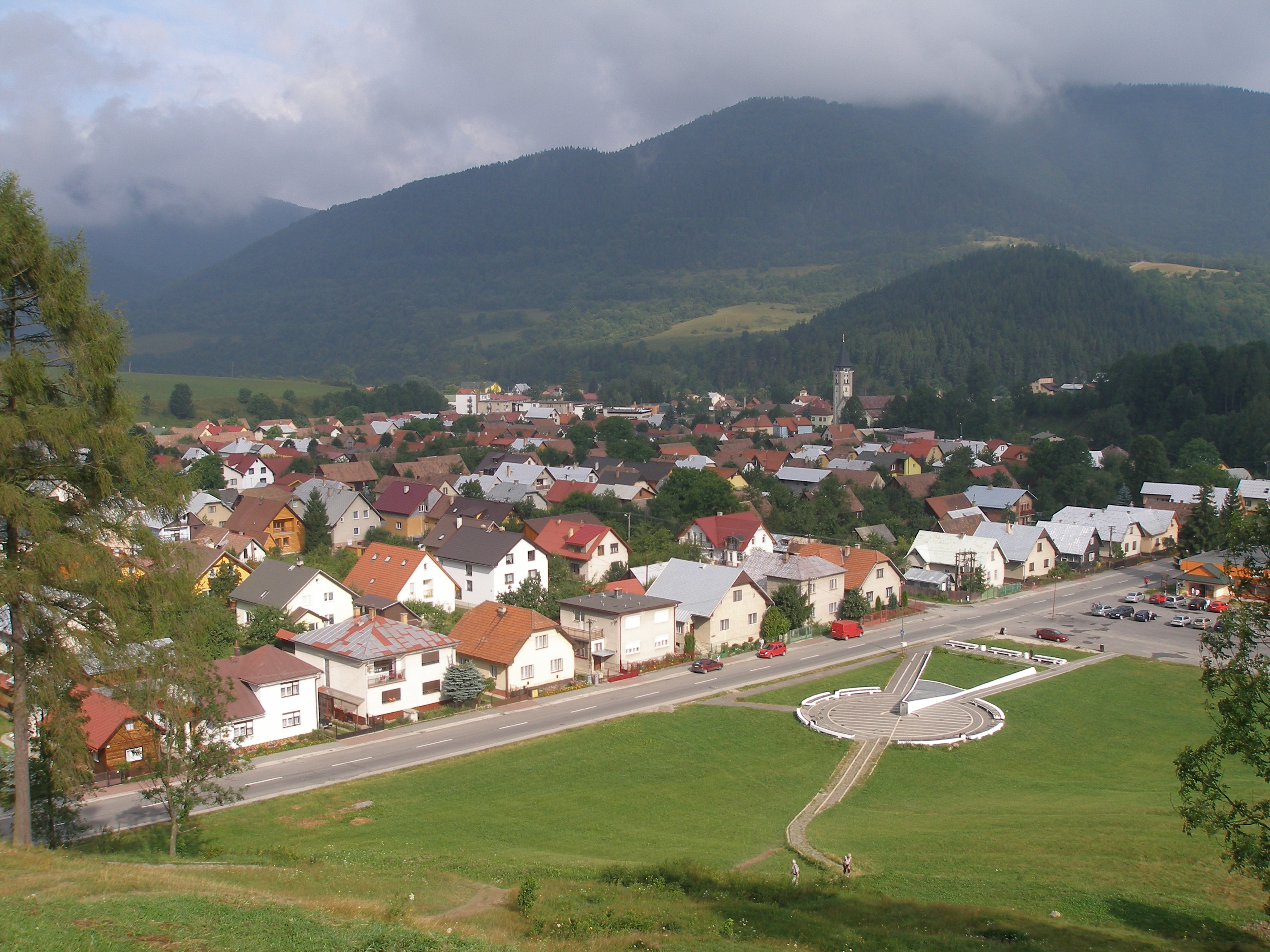
Terchová is not a place you can just pass through in ten minutes. It is not a village with a single square and a church—it is a tapestry of hamlets and isolated homesteads scattered across the slopes, where houses stand high above the road and some can only be reached on foot. That is precisely why the landscape here has such a unique scale: wherever you look, you see meadows, barns, and rising above them, the craggy peaks of the Malá Fatra mountains.
We are a village in northern Slovakia, in the Žilina district, and since time immemorial we have served as the gateway to the mountains. People come here for hiking, skiing, music, and for a legend that was born right here.
Where is it: Terchová in northern Slovakia, beneath Malá Fatra
Terchová lies in northern Slovakia, in the Žilina Region, nestled right below the rocky cliffs of Malá Fatra National Park. Slovakia is a country in the heart of Europe, a member of the EU and Schengen area, with the Euro as its currency and a dense network of mountains—nine national parks packed into an area smaller than Austria. For international visitors, this means easy access, English widely spoken in most accommodations, and prices that remain significantly lower than in the Alps.
By car, you can reach us in two and a half hours from Bratislava, three hours from Kraków, and three and a half hours from Vienna. The nearest airports are Žilina, Bratislava, Kraków, Katowice, and Vienna; by train, you can travel to Žilina and take a direct bus straight to Terchová. We are also a great base for exploring all of northern Slovakia—the High Tatras, Orava, and Liptov are all within a one- to two-hour drive.
Jánošík, hamlets, and music
The most famous native of Terchová is Juraj Jánošík, born in 1688—an outlaw highwayman who became a national symbol. A colossal aluminum statue dedicated to him overlooks the village; a short climb brings you to its base, offering a sweeping view of the entire valley. Whether you see Jánošík as a historical figure or a legend, his story is everywhere here—in place names, in songs, and in the way the locals talk about themselves.
The second source of our local pride is Terchovská muzika (Terchová music). This is a distinct multi-part polyphonic style of string instrument playing, inscribed in 2013 on the UNESCO Representative List of the Intangible Cultural Heritage of Humanity. It is no dusty museum relic: it is played in pubs, at weddings, and especially during the Jánošíkove dni (Jánošík Days) festival, which takes place every summer and fills the valley with visitors from across Slovakia.
The third layer is the settlement pattern itself. The traditional kopanice (scattered hillside settlement) way of life—grazing, forestry, farming on steep slopes—shaped this village for centuries and remains visible in how the landscape looks today. When the high mountain meadows are mowed in summer, it is a sight you can hardly find anywhere else in Slovakia.
Where to go: mountains you won't forget
Jánošíkove diery (Jánošík's Gorges) are the most captivating attraction in the area and one of the most stunning gorge systems in Slovakia. The trail leads straight up the stream bed, over ladders, chains, and footbridges, past dozens of waterfalls. It isn't mountaineering, but it’s no casual Sunday stroll either—you'll need sturdy footwear, caution, and plenty of time. The circuit through Dolné diery and Nové diery takes about three to four hours, while the full loop including Horné diery can take up to six. In high season, head out early in the morning; by afternoon, queues form at the ladders.
Vrátna dolina (Vrátna Valley) is the second heart of the village. The cable car up to Chleb lifts you straight to the ridgeline of Malá Fatra, where you can continue on to Veľký Rozsutec (1,610 m), Veľký Kriváň, or simply hike along the ridge before descending. Rozsutec is iconic—a sharp limestone cone you'll recognize from photos even if you've never visited Terchová before. The entire area belongs to Malá Fatra National Park, so stick to marked trails and hike with respect for nature.
In winter, Vrátna transforms into a ski resort with slopes for all skill levels and cross-country ski trails in the valley. For families with young children, there is a smaller ski slope right by the village and sledding up in the hillside hamlets.
If you prefer something gentler, you can walk up to the lookout tower above the village, explore an educational trail, or simply sit on a terrace enjoying the view of Rozsutec. That, too, is a day well spent.
Where to stay — from cozy cabins to hotels
Terchová thrives on tourism, offering a wealth of accommodation options across a wide price spectrum.
Most budget-friendly are the cottages, apartments, and private rooms in the hillside hamlets—often traditional wooden cabins equipped with kitchens, costing roughly 15 to 25 euros per person per night, giving a group or family an entire house to themselves. In summer, campsites and campgrounds operate in the valley, providing the cheapest way to spend a week here.
Mid-range options include guesthouses right in the village or in Vrátna Valley: offering breakfast, parking, ski drying rooms, and hosts ready to suggest hike routes based on the weather. A double room typically costs 50 to 80 euros per night.
Higher-end choices include mountain hotels tucked inside the valley—such as Hotel Boboty with its wellness facilities and views of Malá Fatra's crags—as well as newer apartment resorts by the cable car. Here, prices start around 100 euros and can rise significantly above that during the peak winter season. If you're planning a visit over Christmas, New Year's, or school winter breaks, book several months in advance.
Where to eat
Terchová's gastronomy is hearty and straightforward: bryndzové halušky (potato dumplings with sheep cheese), kapustnica (sauerkraut soup), tripe soup, potato pancakes, and homemade pastries. Both in the village and Vrátna Valley, you'll find traditional koliba restaurants with open fireplaces, sheep farms (salaš) producing their own cheese, and cozy pubs where live music fills the air on weekends. Local cheeses, žinčica (sheep milk whey), and smoked bacon are staples visitors love taking home.
Practical tip: after descending from Jánošíkove diery, most restaurants are packed between 2:00 PM and 4:00 PM. Either have lunch earlier or opt for a late meal after 5:00 PM—and be sure to try sheep-milk specialties directly at a salaš (sheep farm).
When to visit
Summer is made for gorges and ridgelines, autumn brings peak photography conditions and quiet hiking, winter belongs to skiers, and spring is perfect for those who want the valleys almost to themselves. Weather in Malá Fatra changes quickly—layering your clothes and keeping a raincoat in your backpack are essentials even in August.
Getting here: by car via the road from Žilina through Belá, or by direct bus from Žilina. During high season, parking at Jánošíkove diery and Vrátna is paid and fills up fast, so setting off early in the morning pays off.
Contact and practical information
- Official village website: www.terchova.sk
- Municipal Office: Sv. Cyrila a Metoda 96, 013 06 Terchová, Slovakia
- Location: northern Slovakia, 25 km from Žilina, 230 km from Bratislava
- Currency: Euro (EUR) · Language: Slovak; English and Polish widely used in tourism
For upcoming events (including the Jánošíkove dni festival), trail conditions, and accommodation contacts, visit the official village website.
An invitation
Terchová is a place where you step out the door in the morning and, half an hour later, find yourself climbing a ladder beside a waterfall. Where in the evening, violin music echoes from a pub two streets over. And where your hostess packs a homemade pastry for your journey as you leave. If you are looking for mountains that offer vibrant culture alongside sweeping views, come visit us—and make sure to stay more than just a single day.
This text was created as an introduction to the village for visitors. We recommend checking opening hours, prices, and accommodation availability on the official village website.
Photo gallery

Centrum a typická atmosféra mesta v lokalite Terchová, Slovensko.
Rázovitá slovenská obec Terchová,rodisko ľudového slovenského hrdinu Juraja Jánošíka.
Foto: Jozef Kotulič · CC BY-SA 3.0 · Wikimedia Commons

Centrum a typická atmosféra mesta v lokalite Terchová, Slovensko.
Terchová
Foto: Jerzy Opioła · CC BY-SA 3.0 · Wikimedia Commons

Jedna z historických pamiatok, ktoré tu môžete vidieť v lokalite Terchová, Slovensko.
This media shows the protected monument with the number 511-1383/0 CHMSK/511-1383/0,CHMSK/511-1383(other) in the Slovak Republic.
Foto: Prazak · CC BY 2.5 · Wikimedia Commons

Jedna z historických pamiatok, ktoré tu môžete vidieť v lokalite Terchová, Slovensko.
This media shows the protected monument with the number 511-1383/0 CHMSK/511-1383/0,CHMSK/511-1383(other) in the Slovak Republic.
Foto: BronislavaD · CC BY-SA 4.0 · Wikimedia Commons

Príroda a možnosti výletov v okolí v lokalite Terchová, Slovensko.
Sokolie
Foto: Jerzy Opioła · CC BY-SA 3.0 · Wikimedia Commons

Príroda a možnosti výletov v okolí v lokalite Terchová, Slovensko.
Kysucká vrchovina, Terchová
Foto: Jerzy Opioła · CC BY 3.0 · Wikimedia Commons

Typická regionálna kuchyňa, ktorú tu ochutnáte v lokalite Terchová, Slovensko.
Tarhoňa
Foto: Maciarka · CC BY-SA 3.0 · Wikimedia Commons

Typická regionálna kuchyňa, ktorú tu ochutnáte v lokalite Terchová, Slovensko.
kvasená kapusta
Foto: Maciarka · CC BY-SA 3.0 · Wikimedia Commons
Photographs come from Wikimedia Commons and are used under the licences shown, with attribution.